Art Class
Discover how Riverside Primary's six-year Art curriculum builds creativity and self-expression, from basic drawing to digital art and sculpting.
Our Beliefs
We believe that Art allows students to stay connected with their surroundings by providing them opportunities to communicate their ideas, thoughts and feelings and express themselves through creating and making.
Objectives of Art Curriculum
The objectives of our six-year art curriculum are as follows:
Enjoy and appreciate art of local and global cultures.
Discuss artworks using basic art vocabulary.
Explore the various uses of different art media and techniques through art-making.
Apply appropriate processes, techniques and materials into their artworks.
Discuss intentions of their artworks and interpret other artworks.
In Riverside, teachers engage students in positive and safe learning experiences where they develop sensory awareness, imagination and visual inquiry skills to discover and explore their surroundings. Students are also engaged in art discussions, using See, Think, Wonder at lower primary and Feldman Approach at upper primary, which allows them to describe and interpret artworks with appropriate art terms.
The school’s curriculum provides students with insights on Elements of Art, Principles of Design, Art Forms, Art Techniques and Art Values. Students are also introduced to different types of materials, as well as iPad applications, where they get to explore and experiment with a variety of mediums to create artworks.
The Primary One and Two Curriculum Experience
Art Class curriculum by primary level and art form
Level | Art Forms | Skills learnt |
P1 | Elements of Art, Print-making, Watercolour Painting |
|
P2 | Elements of Art, Collage, Rangoli, Digital Art |
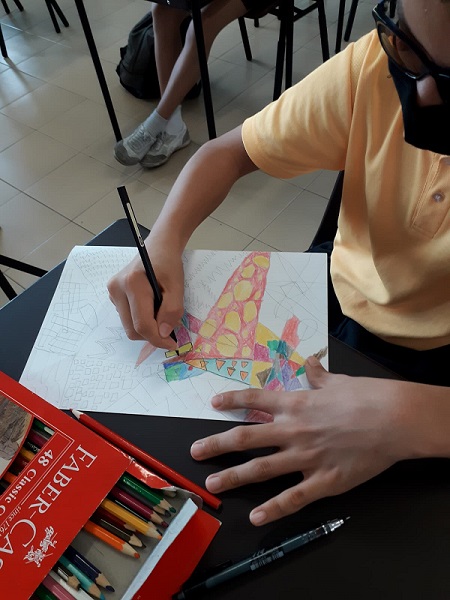
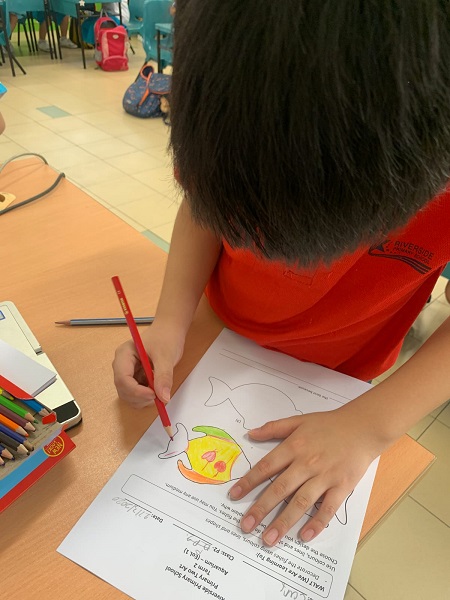
In Primary One and Primary Two, students go through the Elements of Art, where they identify lines and shapes around them and use them in creating their artwork, such as making patterns.
The Primary Three and Four Curriculum Experience
Art Class curriculum by primary level and art form
Level | Art Forms | Skills learnt |
P3 | Painting, Batik, Digital Art, 3D Art |
|
P4 | Drawing Module (Portrait), Chinese Painting, Digital Art, Sculpting |
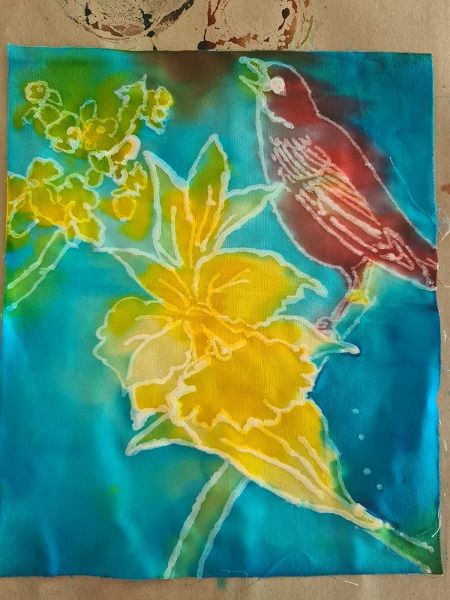
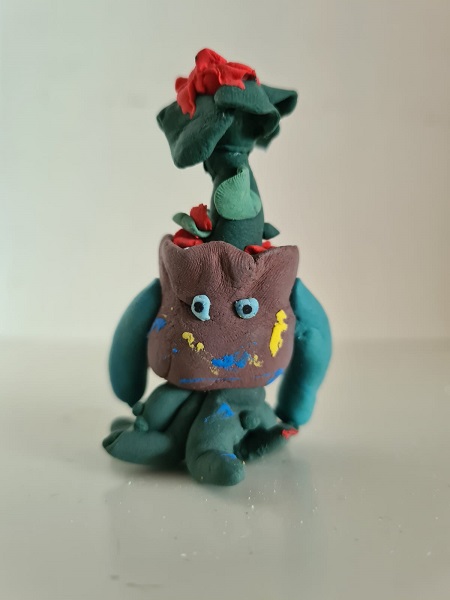
In Primary Three and Four, students are exposed to the different art forms, where they experiment with a variety of materials. They learn to make Batik using simplified materials and design their own imaginary creatures by experimenting with the plasticine and using air dry clay for their final product. Students also use the iPad to learn the basics of photo manipulation and poster making.
The Primary Five and Six Curriculum Experience
Art Class curriculum by primary level and art form
Level | Art Forms | Skills learnt |
P5 | Cubism, Ceramics, Stop-motion |
|
P6 | Wire Sculpting, Photography, Digital Imaging, Drawing Module (Perspective) |
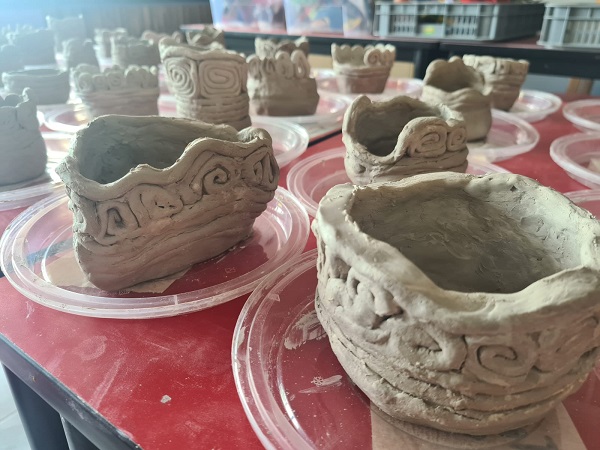
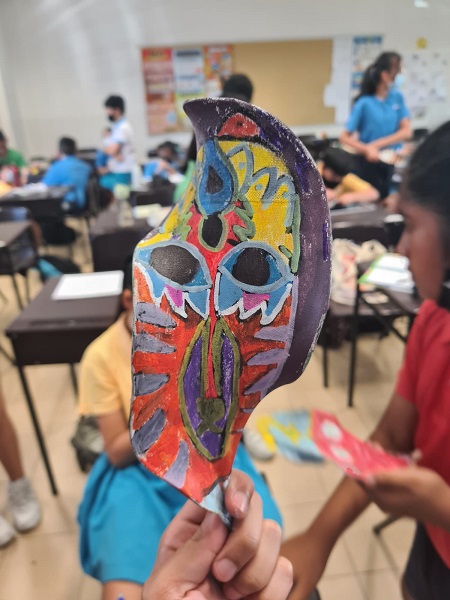
In Primary Five and Six, students explore and experiment with more complex art forms and materials. They learn wire sculpting to paint their own totem design to create a totem pole. They also experimented with the clay to create an aboriginal themed coil pot. At this stage, they also use online app for their photography/ digital imaging module and to create stop-motion animation.
Art Jam
To bring out the artists in all students through:
Exposure
Creativity
Confidence
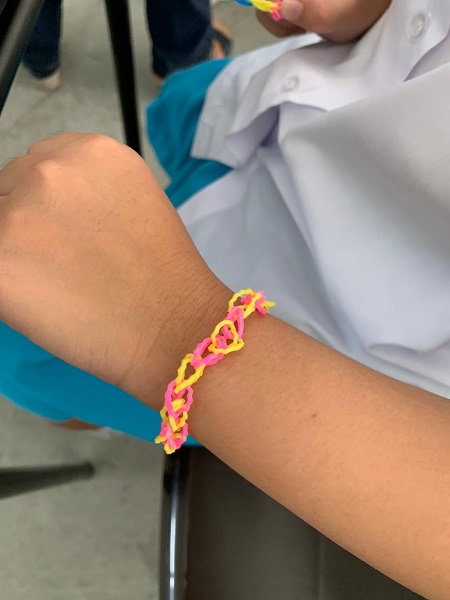
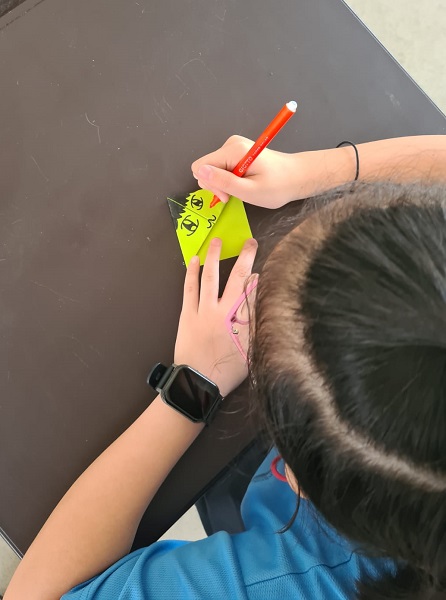
This recess activity allows students to express their creativity and develop an appreciation for the arts through various forms of art-making.